
NXP LPC2102FBD48: A Comprehensive Technical Overview of the ARM7-Based Microcontroller
The NXP LPC2102FBD48 stands as a significant component in the landscape of embedded systems, representing a robust integration of performance, efficiency, and connectivity within a compact form factor. As a member of the LPC2000 family, this microcontroller is built around the ARM7TDMI-S core, a venerable and widely adopted 32-bit RISC processor known for its excellent power-to-performance ratio and extensive ecosystem support.
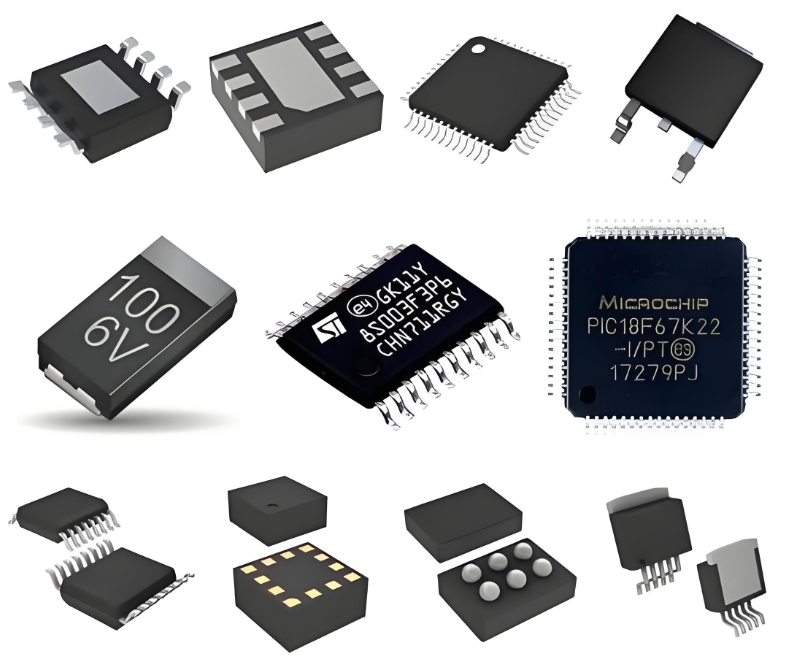
Housed in a 48-pin LQFP package, the LPC2102FBD48 is designed for space-constrained applications that demand substantial processing capability. Its operating frequency reaches up to 60 MHz, providing ample computational throughput for a wide range of industrial, consumer, and automotive control tasks. A key architectural advantage is its von Neumann memory architecture, which simplifies system design by utilizing a single bus for both instructions and data, streamlining data access and management.
Memory resources are strategically configured to support complex applications. The microcontroller features 16 kB of on-chip embedded SRAM for volatile data storage and 128 kB of embedded high-speed flash memory for non-volatile program code storage. This generous flash capacity allows developers to implement sophisticated firmware and application layers without the immediate need for external memory, reducing both system cost and complexity.
One of the most critical features of the LPC2102FBD48 is its sophisticated set of on-chip peripherals, which are designed to minimize external component count and enhance system reliability. These include:
Dual UARTs: Facilitate serial communication with PCs, modems, and other peripheral devices.
I²C-bus Serial Interface: Ideal for communicating with a vast array of sensors, EEPROMs, and other ICs over a simple two-wire bus.
SPI Serial Interface: Enables high-speed synchronous communication with serial flash, ADCs, and display drivers.
Two 32-bit Timers: Excellent for generating precise timing intervals, capturing external events, or generating PWM signals for motor control.
Watchdog Timer: A crucial safety feature that resets the processor in the event of software malfunction, ensuring system integrity.
Real-Time Clock (RTC): Provides a dedicated clock and calendar function, which is invaluable for time-sensitive applications.
The microcontroller's vector interrupt controller (VIC) is a notable enhancement, significantly improving interrupt handling efficiency. It allows for low latency and deterministic response to external events, which is paramount for real-time control systems. Furthermore, its low power consumption across multiple idle and power-down modes makes it exceptionally suitable for battery-powered or energy-sensitive applications.
In summary, the LPC2102FBD48 leverages the power of the ARM architecture to deliver a highly integrated and capable solution for embedded designers. Its blend of processing power, ample memory, and a rich peripheral set makes it a versatile choice for applications ranging from industrial networking and motor drives to point-of-sale equipment and medical devices.
ICGOODFIND: The NXP LPC2102FBD48 is a highly integrated, ARM7-based workhorse microcontroller, offering an optimal balance of 32-bit performance, extensive on-chip memory, and a rich peripheral set in a compact 48-pin package, making it a formidable choice for complex embedded control applications.
Keywords: ARM7TDMI-S Core, Embedded Flash Memory, On-Chip Peripherals, Vector Interrupt Controller (VIC), Low Power Consumption.

