
NXP PCA9548AD: An 8-Channel I²C Bus Multiplexer with Reset Function
In modern electronic systems, the Inter-Integrated Circuit (I²C) bus is a widely adopted standard for communication between low-speed peripherals and a central controller. However, a fundamental limitation of the I²C protocol is the potential for address conflicts, where multiple devices share the same I²C address, making them inaccessible on the same bus. Furthermore, the cumulative capacitance of a large number of devices can limit the bus speed and reliability. To overcome these challenges, bus multiplexers are essential. The NXP PCA9548AD stands out as a highly effective solution, providing precise control over eight separate I²C channels from a single master.
The primary function of the PCA9548AD is to resolve I²C address conflicts and expand the number of available downstream channels. It acts as a single-pole, eight-throw switch, controlled via the upstream I²C bus. The master controller can selectively enable any one of the eight downstream channels (SCn/SDn) by writing a single control byte to the multiplexer's own I²C address. A key feature is that only one channel can be active at any given time, which effectively isolates each downstream bus segment, preventing electrical and addressing issues between them. This allows the system to incorporate multiple identical sensors or devices that would otherwise be incompatible on a single bus.
A significant advantage of the PCA9548AD is its bidirectional voltage-level translation capability. The device allows the upstream bus (SDA/SCL) to operate at a voltage (VDD) different from the voltages on the downstream channels (VDDn). This is crucial in mixed-voltage systems, where a microcontroller running at 1.8V might need to communicate with peripherals operating at 3.3V or 5V. The multiplexer handles this translation transparently, simplifying design and increasing compatibility.
Another critical feature is the inclusion of a hardware reset function via the /RESET pin. Driving this pin low initiates a reset sequence, which immediately deselects all channels and forces the device's internal control register to its default power-on state. This provides a failsafe mechanism for the system to recover from bus lock-ups or software errors, ensuring a known and stable starting point without the need for a full power cycle.
The device also incorporates three programmable address pins (A0, A1, A2), allowing up to eight PCA9548AD devices to be placed on the same upstream I²C bus. This cascadability enables the creation of extensive I²C networks with a theoretical maximum of 64 isolated channels, making it suitable for highly complex systems like server motherboards, telecommunications equipment, and advanced test and measurement apparatus.
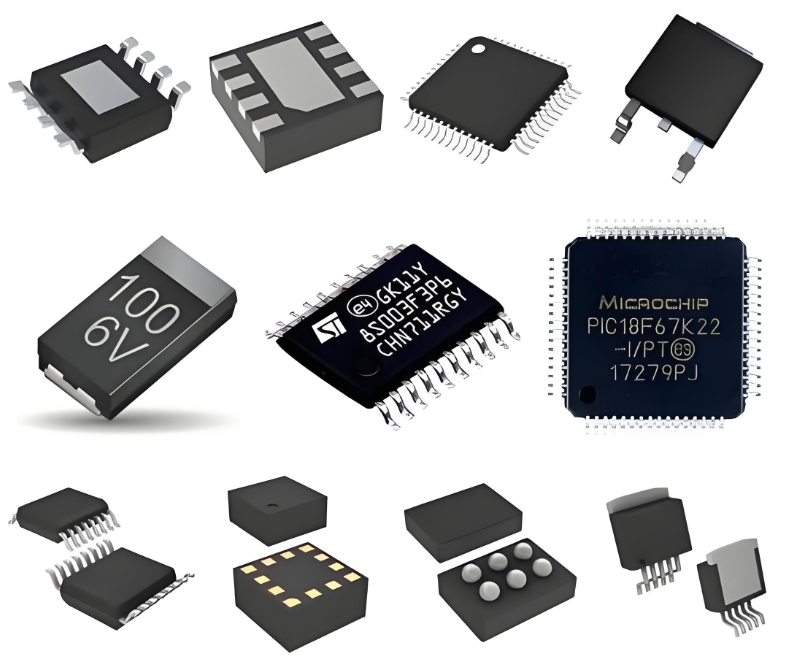
Typical applications are vast and include:
Server and RAID Controllers: Managing multiple temperature sensors, voltage monitors, and EEPROMs.
Industrial Control Systems: Interfacing with arrays of identical sensors across different modules.
Consumer Electronics: Enabling communication with multiple peripherals in smart TVs, set-top boxes, and gaming consoles.
Test and Measurement Equipment: Automating the testing of multiple I²C devices in parallel.
ICGOODFIND: The NXP PCA9548AD is an indispensable component for mastering complex I²C bus architectures. Its ability to resolve address conflicts, provide robust channel isolation, perform voltage-level translation, and offer a hardware reset makes it a superior choice for designers aiming to enhance system scalability, reliability, and flexibility. It transforms the limited I²C bus into a powerful and expansive communication network.
Keywords: I²C Multiplexer, Address Conflict Resolution, Voltage-Level Translation, Hardware Reset, Bus Expansion.

